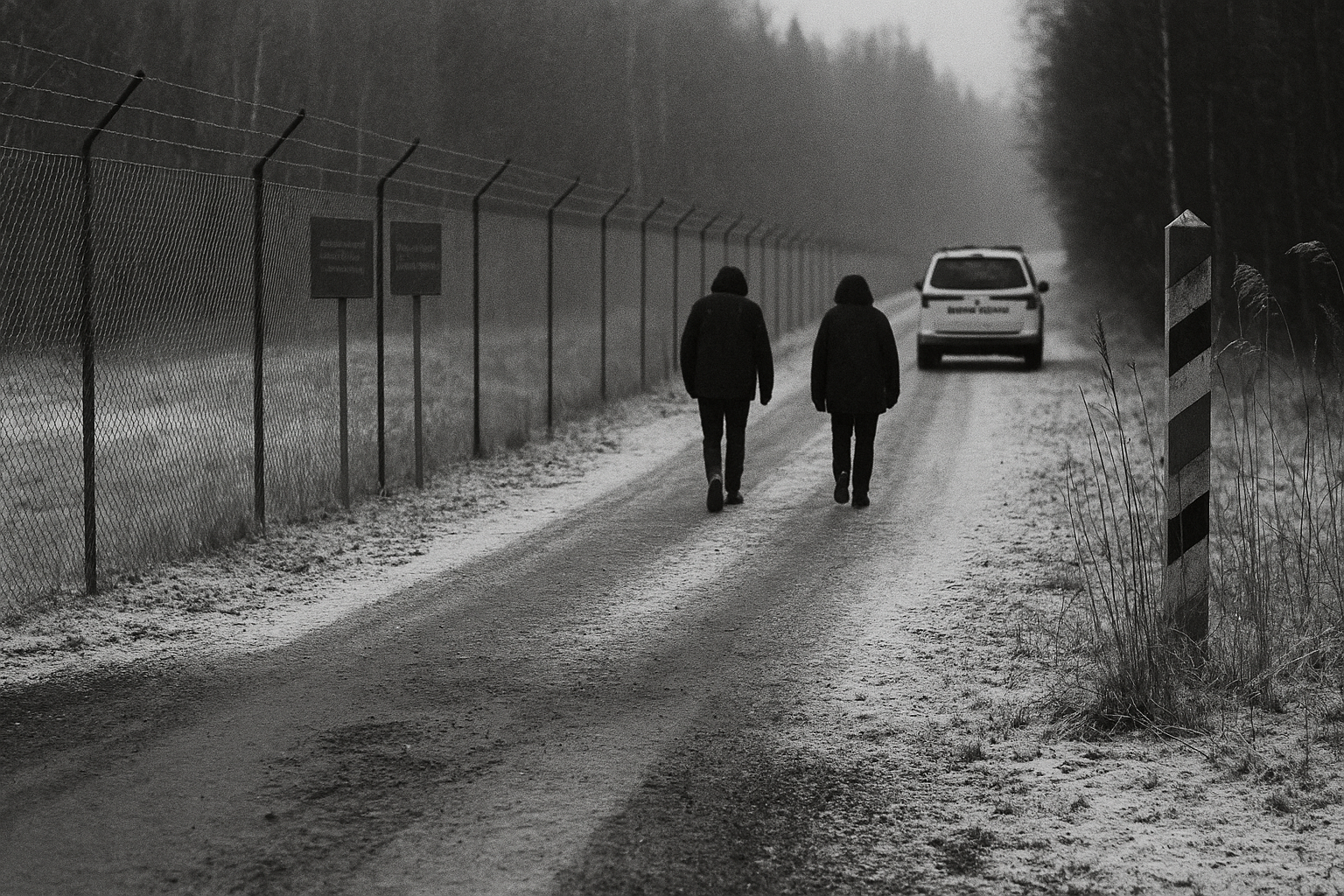
Two asylum seekers cross near Imatra, eastern border stays active, South Karelia handles another case
- Two people are suspected of a state border offence after crossing near Imatra from Russia.
- Both have applied for asylum in Finland.
- The case was handled by the Southeast Finland Border Guard and local police in South Karelia.
- The incident comes as Finland keeps its eastern border largely closed after repeated pressure from Russia.
Two asylum seekers are suspected of illegally crossing from Russia into Finland near Imatra in South Karelia. Helsingin Sanomat reports that the pair are suspected of a state border offence and that both have applied for asylum after entering Finland.
The crossing took place on a stretch of frontier that has remained politically and operationally sensitive since Finland closed passenger traffic at its eastern border crossings in response to arrivals routed through Russia. That closure did not remove the workload; it changed its shape. Instead of processing people at open border stations, Finnish authorities have had to treat individual crossings along the land border as criminal cases first, asylum cases second, with the Southeast Finland Border Guard and local police handling the immediate response.
Imatra sits in one of the sectors where the border is close to settled areas and transport links, which makes each incident more than a local police matter. A pair arriving on foot can trigger patrols, preliminary investigation, identity checks and asylum registration, all for a border that is officially closed to this kind of traffic. The state bears the cost of keeping the line shut while still maintaining enough personnel to respond when it is crossed anyway.
The broader pattern is the point. Finland’s eastern frontier has not returned to the old routine of predictable checkpoint traffic; it has moved into a lower-volume, higher-alert phase shaped by Russian pressure and Finnish countermeasures. Each small case tests the same chain: surveillance, interception, criminal investigation, asylum procedure and local capacity in border regions such as South Karelia. The numbers are small compared with the surge that prompted the closure, but the administrative sequence is the same every time.
For the Border Guard, that means resources remain tied to a border that is no longer managed mainly through normal crossing points. For municipalities and police in the southeast, it means repeated incidents must be handled without assuming they are isolated curiosities. Finland has been building fences, tightening legislation and extending border closures; the work on the ground still begins with patrols meeting people in the forest near places like Imatra.
The two suspects are now in Finland’s asylum system while the suspected border offence is investigated. Near Imatra, the border is closed on paper and staffed in reality.
Källor: Helsingin Sanomat