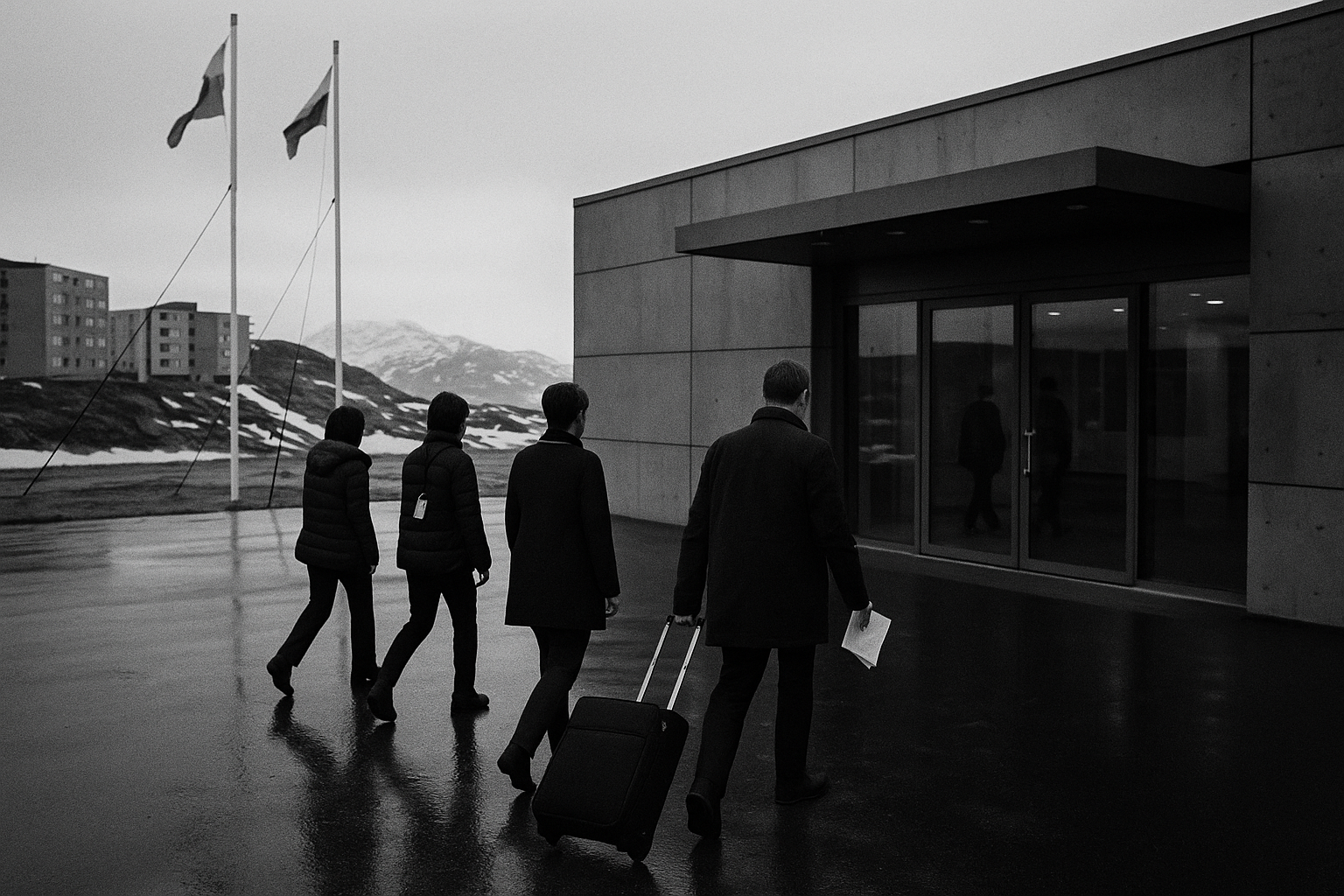
US delegation heads to Nuuk, Greenland conference becomes test of Washington pressure
- DR reports that Louisiana governor Jeff Landry is expected to join the U.S. delegation to Future Greenland in Nuuk.
- The trip follows renewed American attention to Greenland, where access, influence and Arctic positioning now travel together.
- For Greenlandic officials, each high-profile visit raises the same question: commercial contact, diplomatic outreach, or strategic probing.
A U.S. delegation is expected to attend next week's Future Greenland conference in Nuuk, with Louisiana governor Jeff Landry — a declared Trump ally — reportedly set to take part. DR Nyheder reports that Washington's special envoy to Greenland is also expected to be part of the visit, and that preparations are already under way on the island.
The conference itself is the formal reason for the trip. The larger fact is that Greenland has again become a destination for American political traffic. Landry is not a trade official or a technical civil servant; he is a sitting governor with a clear political profile and public loyalty to Donald Trump. That makes the delegation harder to read as routine diplomatic maintenance. It looks instead like a signal that Washington wants visible representation in Nuuk while Arctic access, minerals, shipping routes and military positioning are all being renegotiated at once.
Greenland has seen this pattern before. The island's vast territory, small population and strategic location between North America and Europe give outside powers an obvious interest in showing up early and often. The United States already has a military presence at Pituffik Space Base, formerly Thule Air Base, and every additional visit by political envoys or allied officeholders raises the price of saying that these are merely ordinary exchanges. A conference badge may open the door; the question is what level of access follows after the speeches and panel sessions end.
For Greenlandic authorities, the difficulty is not receiving foreign guests but managing the terms on which they arrive. Nuuk is trying to build investment, expand external ties and defend room for political decision-making at the same time. Those goals do not always sit comfortably together when the visitor is backed by a state that has openly treated Greenland as a strategic asset. Denmark, which still controls foreign and security policy for the kingdom, sits in the background of every such visit. Greenland gets the attention; Copenhagen inherits part of the pressure.
For Nordic readers, the episode fits a broader Arctic shift. Greenland is no longer discussed only as a distant autonomous territory inside the Danish realm. It is being handled by larger powers as a piece of infrastructure: airfields, ports, minerals, sea lanes and missile warning all packed into one map. When American political figures start arriving in Nuuk ahead of a business conference, the conference matters less than the choreography around it.
Next week, the visitors will land in a capital of about 19,000 people on an island that outside governments keep describing in terms of strategic necessity. The runway in Nuuk is short; the queue of interested powers is not.
Källor: DR Nyheder