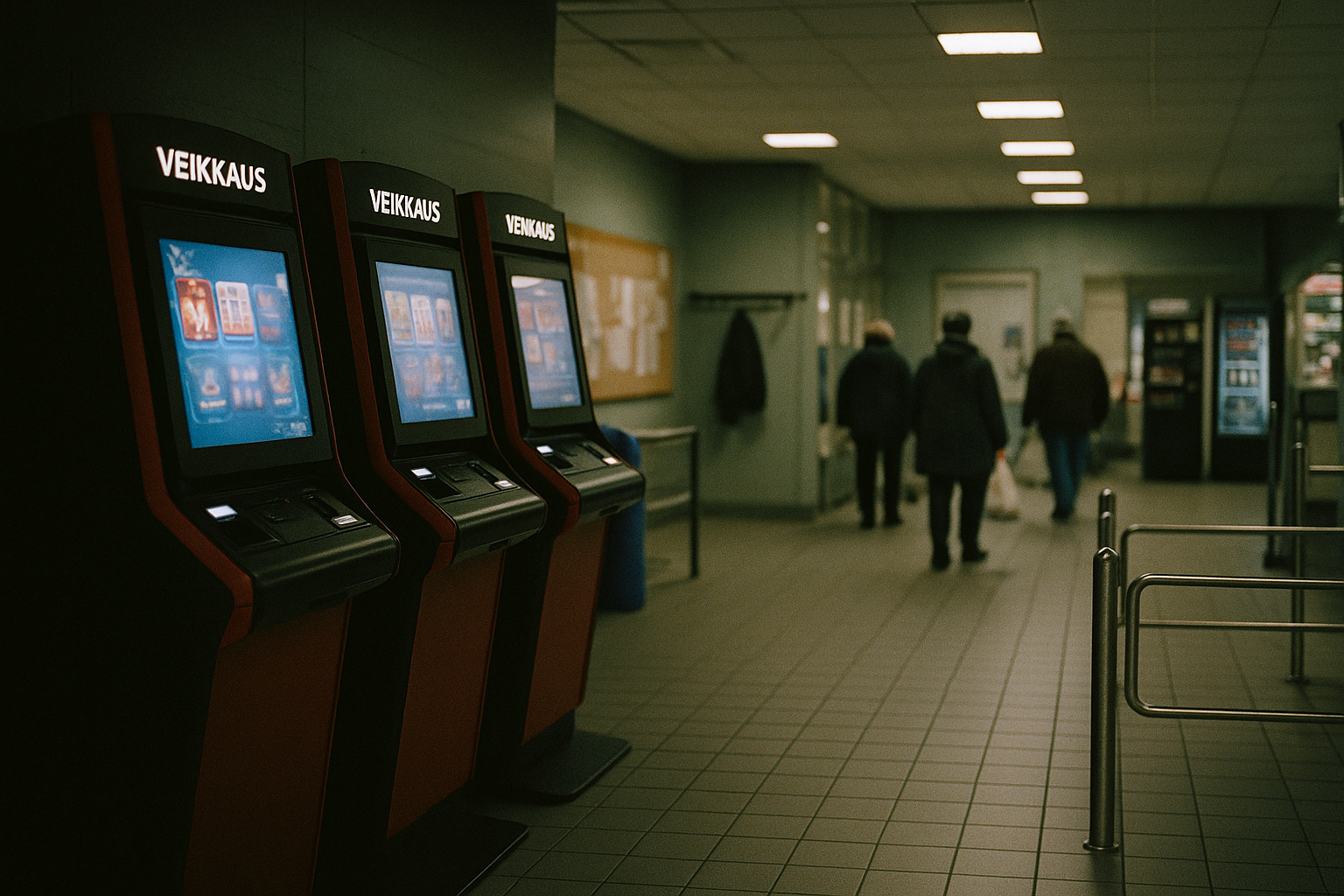
Veikkaus packs slot machines into poorer regions, Lapland and eastern Finland top density table, state gambling revenue follows
- Iltalehti found that lower regional income levels correlate with more Veikkaus slot machines per resident.
- Lapland and eastern Finland stand out as the areas with the heaviest machine density.
- The findings sharpen scrutiny of a state-owned gambling monopoly that presents its proceeds as funding for public causes.
- The regional spread invites comparison between machine density, gambling losses and local purchasing power.
Veikkaus, Finland’s state-owned gambling monopoly, has concentrated its slot machines in poorer parts of the country, with Lapland and eastern Finland showing the highest density per resident. In a new investigation, Iltalehti reports that the lower a region’s income level, the more gambling machines it tends to have.
That gives a sharper outline to a system long marketed as a public benefit. Veikkaus is state-owned, its profits have been tied to socially approved spending, and its retail slot machines have for years been placed in ordinary shopping environments rather than isolated casinos. Iltalehti’s findings suggest that this network is not spread evenly across the country but follows a clear economic gradient. The regions with less money have more opportunities to lose it, one machine at a time.
Lapland and eastern Finland are not marginal footnotes in this picture. They are large areas with older populations, weaker labour markets in many municipalities and, in many cases, lower disposable incomes than the growth centres around Helsinki, Tampere and Turku. A denser slot-machine footprint in those regions means the state monopoly’s most visible product is most available where private consumption is already tighter. The arrangement also shifts the burden of gambling revenue away from abstract national averages and into specific places: supermarket entrances, service stations and local shops in regions with less room for error.
The next comparison is obvious. Machine density shows where Veikkaus has chosen to place access; player-loss data would show where the cash actually comes from. Set beside regional income levels, that would reveal whether the monopoly’s revenue base leans hardest on the same low-income areas where its machines are most common. Veikkaus has responded to Iltalehti’s reporting, but the distribution itself is harder to explain away than any single statement about responsibility or harm prevention.
For readers outside Finland, the case is legible without much translation. A Nordic welfare state runs the gambling monopoly, frames the proceeds as serving the public, and places the product most densely in less affluent regions. In Lapland and eastern Finland, the green slot machines are easier to find than rising wages.
Källor: Iltalehti