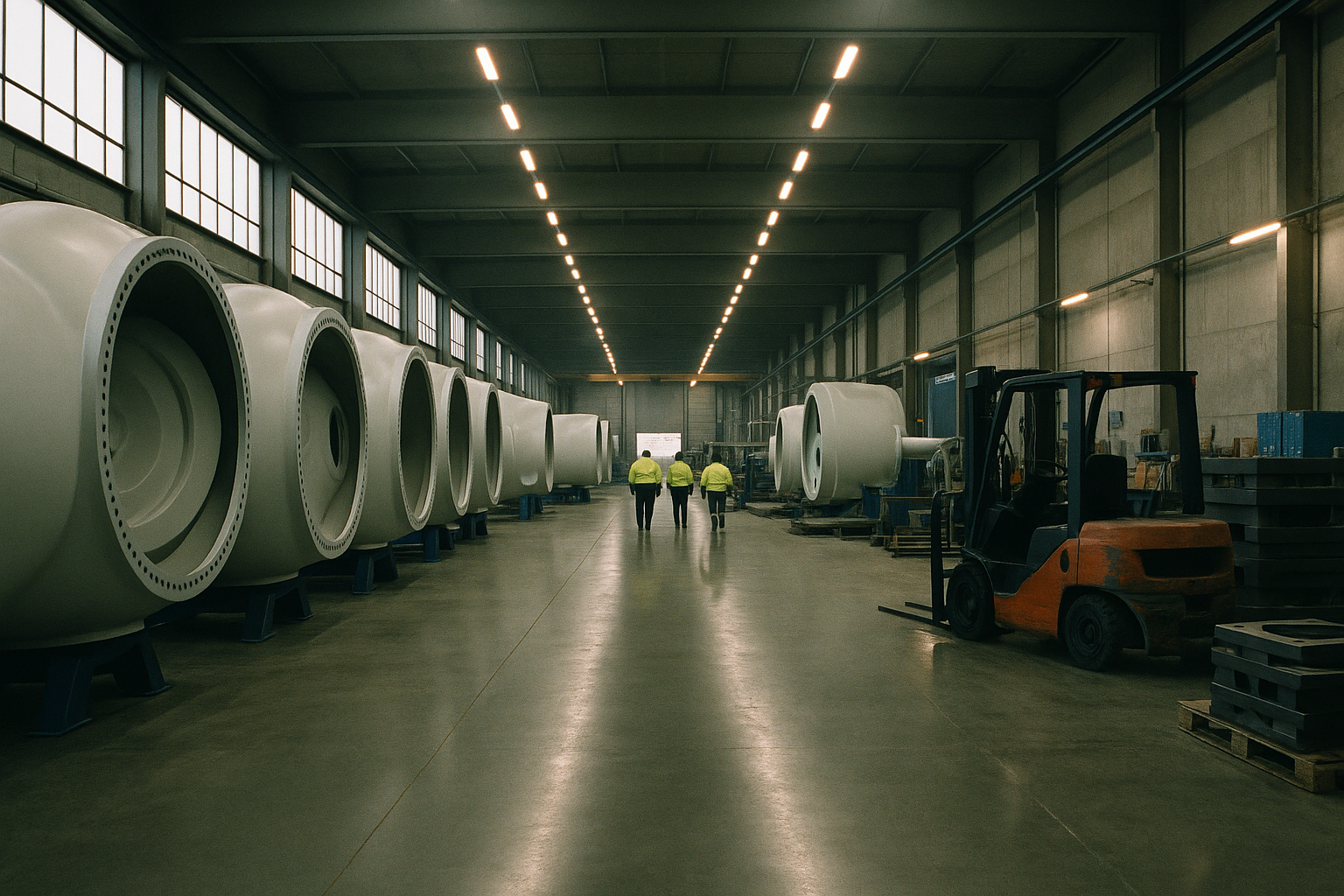
Vestas expands Lem, west Jutland wind production shifts inland, 110m kroner gathers jobs at one site
- Vestas is investing DKK 110 million in production facilities in Lem, western Jutland.
- Employees will be moved to Lem as the company consolidates west Jutland production.
- The decision points to concentration rather than broad dispersion of Danish wind-manufacturing jobs.
- The key open questions are how many jobs move, what production lines are transferred, and how permanent Lem’s role becomes.
Vestas will invest DKK 110 million in its factory facilities in Lem and move employees there as it gathers more of its west Jutland production in one place. Berlingske reports that the turbine maker is consolidating operations around the Ringkøbing-Skjern area town, a long-standing centre of Danish wind manufacturing.
The immediate fact is simple: money and workers are being directed to Lem, not spread across several sites. That matters in an industry often described in national terms, with talk of Denmark’s green transition and export strengths, while the actual factory footprint is decided municipality by municipality, building by building. A DKK 110 million upgrade suggests Vestas sees enough value in the Lem site to deepen it rather than keep capacity fragmented. It also suggests that when wind-industry jobs survive in Denmark, they may do so in tighter clusters with existing suppliers, trained labour and transport links, not as a broad regional distribution of smaller plants.
The unanswered numbers are the ones that will decide how large this shift really is: how many employees are being transferred, from which locations, and what production is being moved with them. If the transfer consists mainly of support functions or limited assembly work, the effect on Denmark’s manufacturing base will look different than if core hardware production is being concentrated there. The distinction matters for local tax revenue, subcontractors and the durability of employment. A factory that gains specialised production lines becomes harder to replace than a site that merely absorbs staff while strategic functions sit elsewhere.
For Danish industrial policy, the move offers a more concrete picture than the usual green-growth slogans. The state can subsidise demand for renewable power, speed permitting and set climate targets, but the geography of industrial work is still being drawn by companies seeking lower costs, fewer handovers and denser supplier networks. Lem appears to be gaining from that arithmetic. Other west Jutland sites, by definition, are not.
That leaves Lem looking less like a routine plant upgrade and more like a test of whether Denmark’s wind sector is building deeper manufacturing strongholds or simply rearranging the same jobs under greener headlines. The investment figure is fixed at DKK 110 million; the missing figure is how many pay slips will now carry a Lem address.
Källor: Berlingske