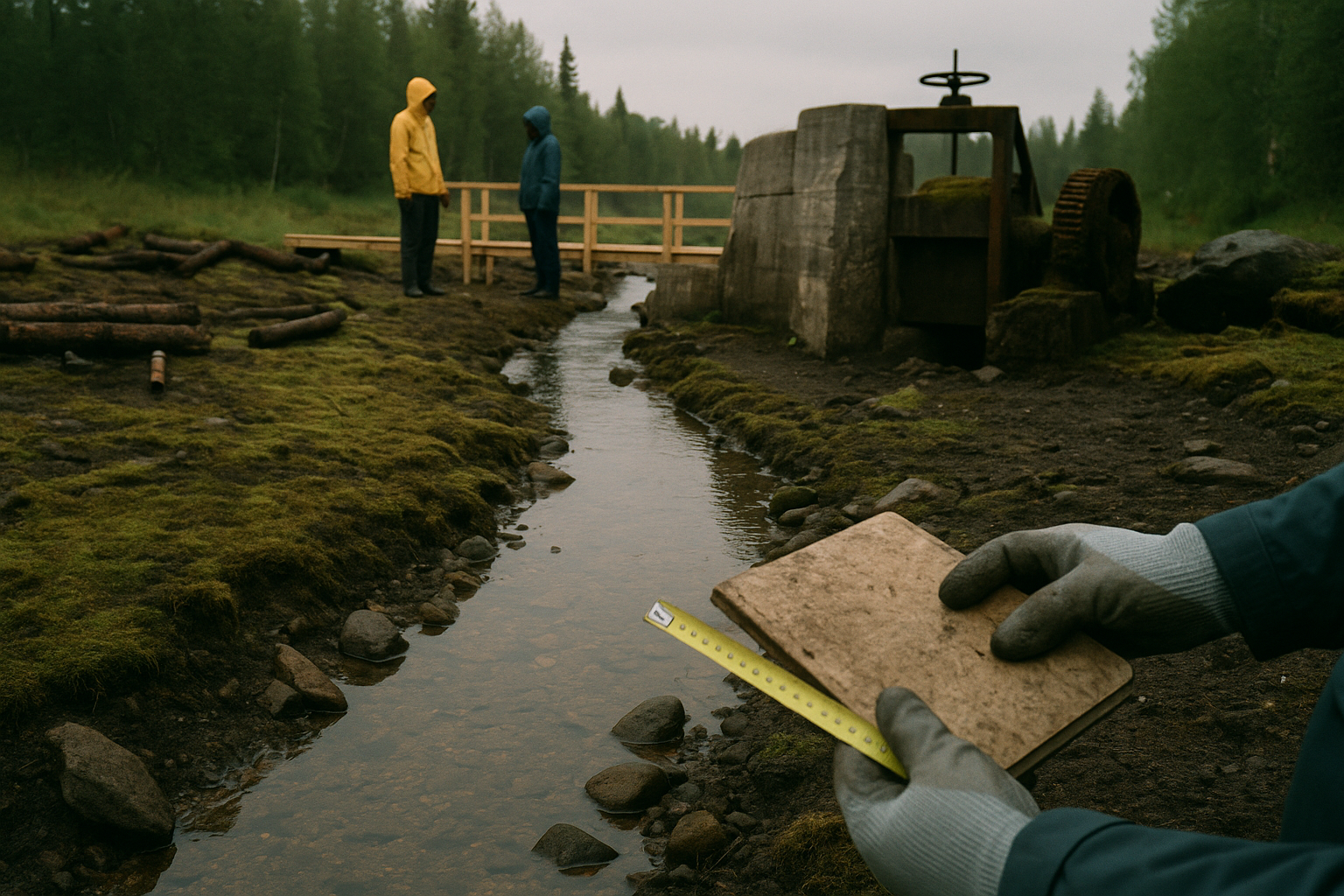
Volunteers reopen Kuusamo river, bought-out hydropower plant breaks 70-year shutdown, fish return to Piilijoki
- Piilijoki, a branch of the Kuusinkijoki river system in Kuusamo, had been left dry since hydropower construction in the 1950s.
- Volunteers financed the purchase of the plant and pushed through the steps needed to restore water flow.
- The case shifts the question from ecological goals to ownership: someone had to buy the old infrastructure before the river could be reopened.
- Fish have now been observed in the restored channel, giving the project a visible result after decades of industrial lock-in.
Fish have returned to Piilijoki in Kuusamo after a volunteer group bought the small hydropower plant that had kept the river branch dry for about 70 years. In YLE Uutiset' report, the reopening of the channel is presented as a rare Finnish case where local actors, rather than a state restoration programme, paid to remove the effects of old energy infrastructure.
Piilijoki is a branch of the Kuusinkijoki watercourse in northeastern Finland. It was cut off when hydropower works diverted the water in the 1950s, leaving the old riverbed dry for decades. The restoration required more than ecological goodwill. The plant first had to change hands, because as long as the hydropower structure remained in place under its existing use, the dry channel was simply the standing arrangement inherited from an earlier industrial decision.
That ownership question is what makes the case stand out. Rivers across Finland were altered for timber floating, power production and flood control, and many of those arrangements still survive because reversing them costs money while the damage is diffuse and old. Utilities can continue operating within long-established permits; public authorities can study, compensate and delay; the river remains where it was left. In Kuusamo, volunteers instead raised the money to buy the plant themselves and then restored the flow.
YLE reports that the reopened river is already showing biological results, with fish returning to the channel. That matters beyond one stream. A restored riverbed is not created by declaring support for biodiversity; someone has to acquire the asset, alter the water management and carry the cost of lost production or dismantling. The Kuusamo project puts a price tag on repair that had long been left off the books.
The model is not automatically portable. Each site would depend on the value of the power production, the terms of water permits, the willingness of owners to sell and the ability of local groups to raise capital. Small hydropower sites are easier targets than large strategic dams, and volunteer financing will not reopen every blocked river in Finland. But where a plant is marginal, the legal route exists and local support is strong, Kuusamo offers a working sequence: buy the bottleneck, reopen the flow, wait for the river to do the rest.
For decades, Piilijoki stayed dry because the old arrangement was cheaper to keep than to undo. The fish returned only after somebody bought the machinery.
Källor: YLE Uutiset