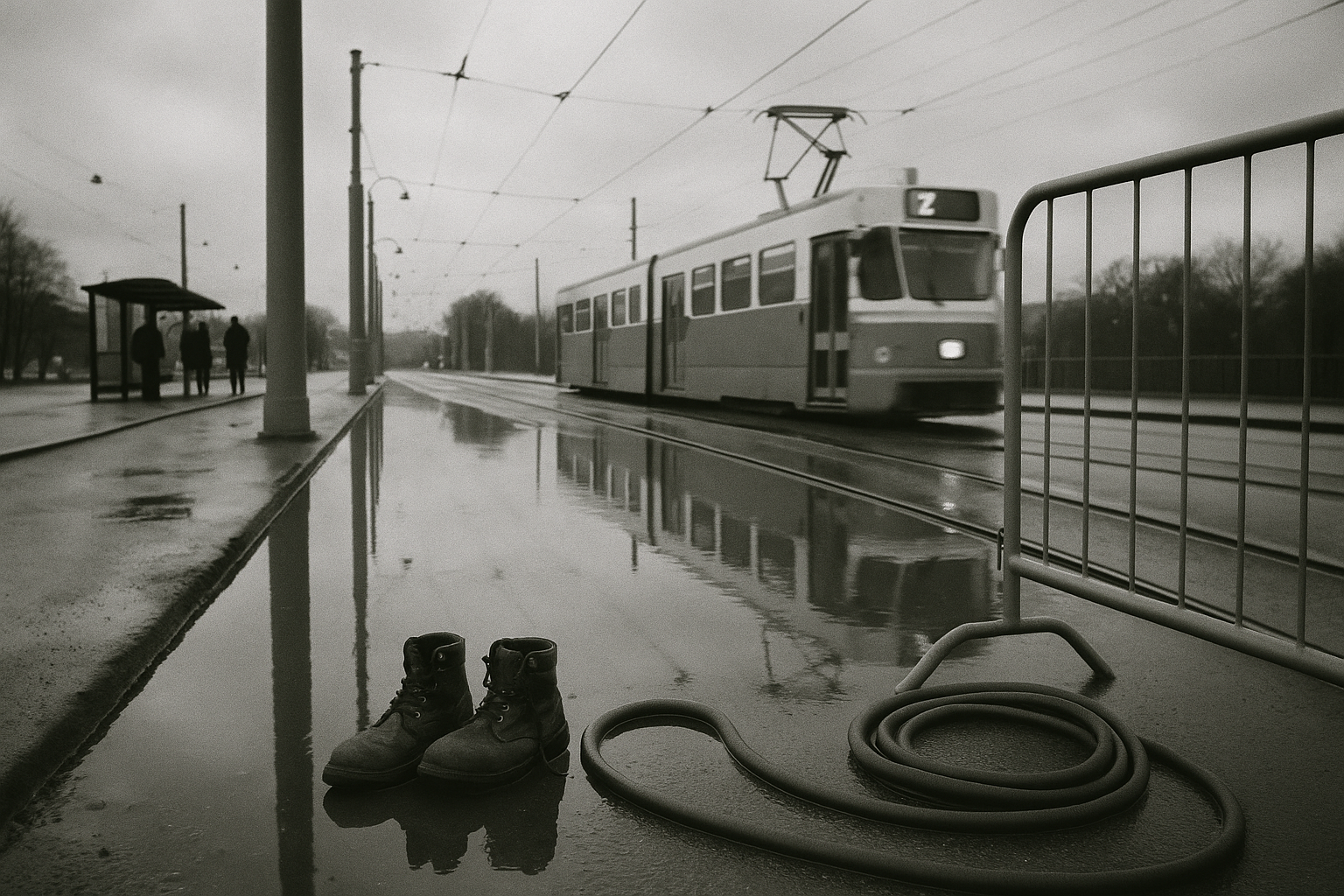
Water leak disrupts Gothenburg trams, core city network shows thin margin for failure
- A water leak has forced partial suspensions on several Gothenburg tram lines.
- The disruption affects a transport network used daily by a large share of the city’s commuters.
- The key question is how fast service can be restored and how much redundancy the network has when one point fails.
A water leak in Gothenburg has disrupted tram traffic, with several lines partially withdrawn from service. Aftonbladet reports that the leak is affecting the city’s tram system, a network that carries a large share of daily travel in Sweden’s second-largest city.
On paper, this is a minor local fault: a burst or leaking water line, a few altered routes, a day of delays. In Gothenburg, it lands differently. The tram system is not a peripheral service but the spine of urban movement, linking residential districts, central interchanges and major workplaces. When several lines are partly suspended, the burden shifts immediately onto replacement capacity, parallel routes and passengers’ own margins for delay. A city built around fixed-track public transport has limited room for improvisation when one section fails.
The incident also points to a broader question that tends to surface only when something breaks: how much slack exists in the system. A resilient network can isolate a fault, reroute traffic and restore normal operations quickly. A tighter network turns a single infrastructure failure into a chain of missed connections, crowded stops and longer travel times well beyond the damaged point. The leak itself may be routine; the useful measure is how many passengers are affected, how long the disruption lasts and whether the city treats this as an isolated repair or one more entry in a growing maintenance ledger.
Swedish urban politics often prefers ribbon-cuttings to pipework, but commuters meet the state underground and under the street: cables, rails, switches and water mains. Gothenburg’s trams run on schedules that assume those systems hold. When they do not, the cost appears first in minutes lost on platforms and in vehicles that stop short of their normal route.
For now, several tram lines remain only partly in service because of a water leak beneath a city that depends on them. The immediate test is not the puddle on the street but how fast Gothenburg can make its timetable true again.
Källor: Aftonbladet