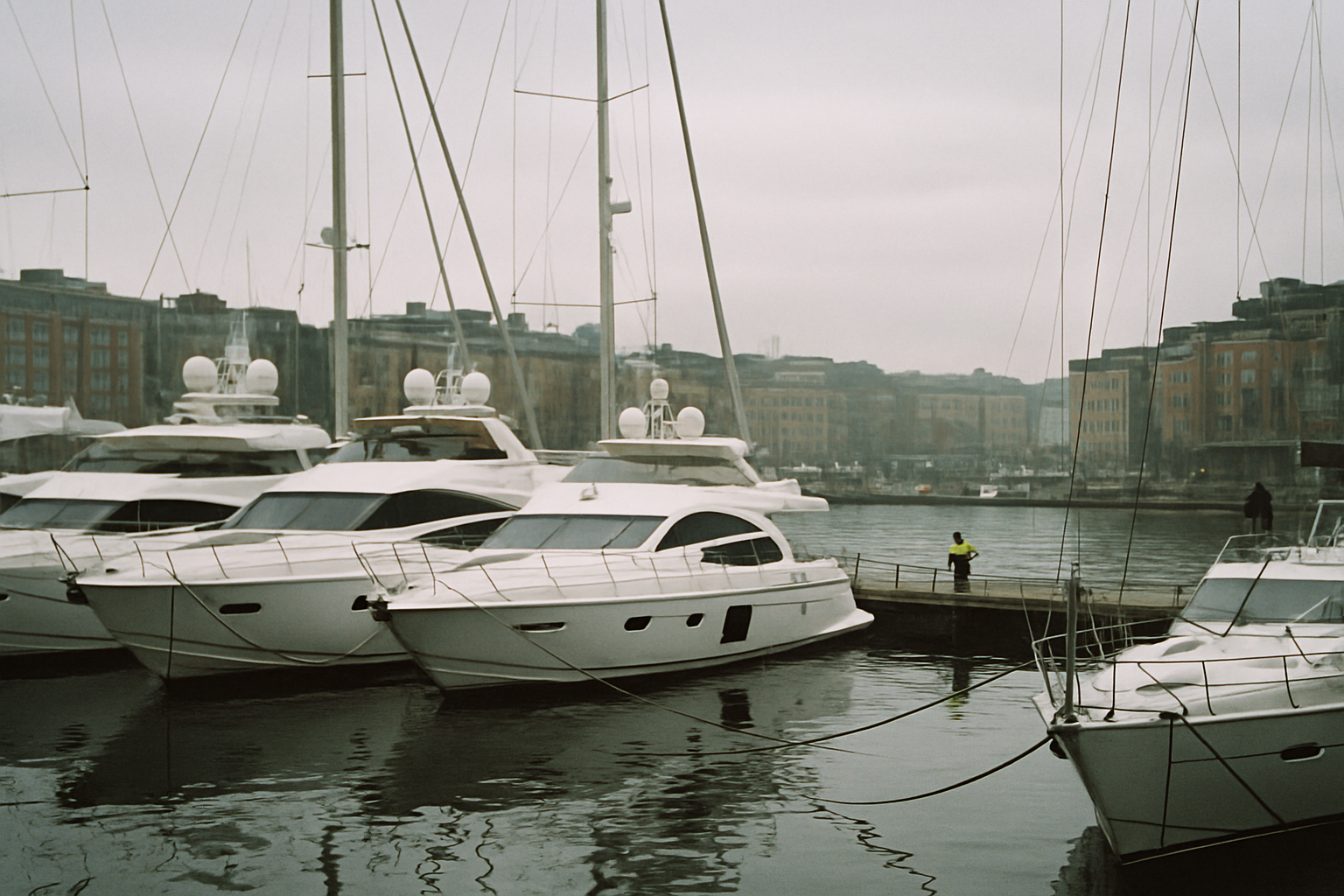
Yachts shift to Norway, EU VAT rules fill Oslo marinas
- Norway's non-EU status lets yacht owners leave the EU customs and VAT area without sailing far from Scandinavian waters.
- Ports such as Aker Brygge gain mooring fees, maintenance work, provisioning and brokerage business from visiting superyachts.
- The traffic shows how tax borders redirect high-value assets and spending even when geography barely changes.
- The question for policymakers is whether this remains ordinary maritime tourism or draws closer scrutiny as tax arbitrage.
Luxury yachts that would otherwise remain in EU waters are appearing in Norwegian harbours because a short detour north can change their tax position. VG reports that Norwegian ports give yacht owners a way to stay outside the EU VAT area, drawing vessels such as "Alice" to Aker Brygge in central Oslo.
The attraction is legal geography, not scenery alone. Norway is part of the European Economic Area but not the European Union, and it sits outside the EU customs union and VAT territory. For owners of high-value boats, that means a Norwegian stop can serve as proof that the vessel has left EU waters for customs purposes. A move of a few nautical miles can therefore postpone or reduce a tax exposure that would be much harder to manage in the Mediterranean or inside the EU's internal market.
The beneficiaries are local and concrete. A visiting yacht does not only rent a berth. It buys fuel, catering, security, cleaning, technical work, spare parts and crew services. Brokers, marina operators and repair yards get business from assets worth tens or hundreds of millions of kroner, and the spending arrives without Norway having to build the yacht or finance the owner. Aker Brygge, already one of Oslo's most expensive waterfront districts, gets a temporary stream of floating capital parked at the quay.
The arrangement also shows how tax systems sort traffic across borders that otherwise look commercially integrated. Norway and Sweden trade freely in many sectors, and Oslo is not far from EU marinas by sea, yet one side of the border can offer a customs break that the other cannot. When the tax bill attached to a vessel is large enough, distance shrinks. The result is a niche service economy built around regulatory differences rather than around natural harbour scarcity.
For policymakers, the sums may still look small beside mainstream tourism or shipping. Superyachts are few, and the direct winners are concentrated: marinas, waterfront businesses, brokers and specialist marine firms. But the underlying logic is larger than the number of hulls in Oslo Fjord. When tax rules make one jurisdiction a convenient waiting room for expensive assets, capital moves first and regulators discuss the consequences later.
At Aker Brygge, the visible result is simple enough: boats too costly to tax casually can sit a short sail from the EU, tied up beside restaurants and apartment blocks on the Oslo waterfront.
Källor: VG